
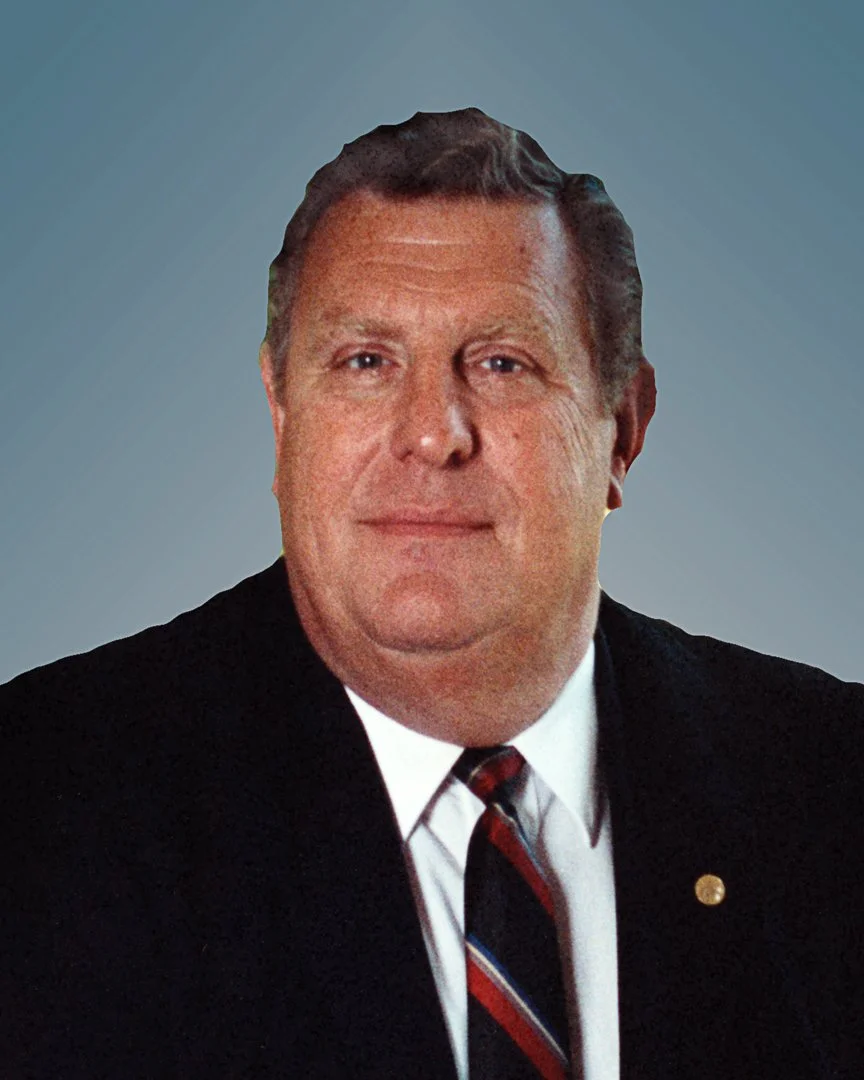
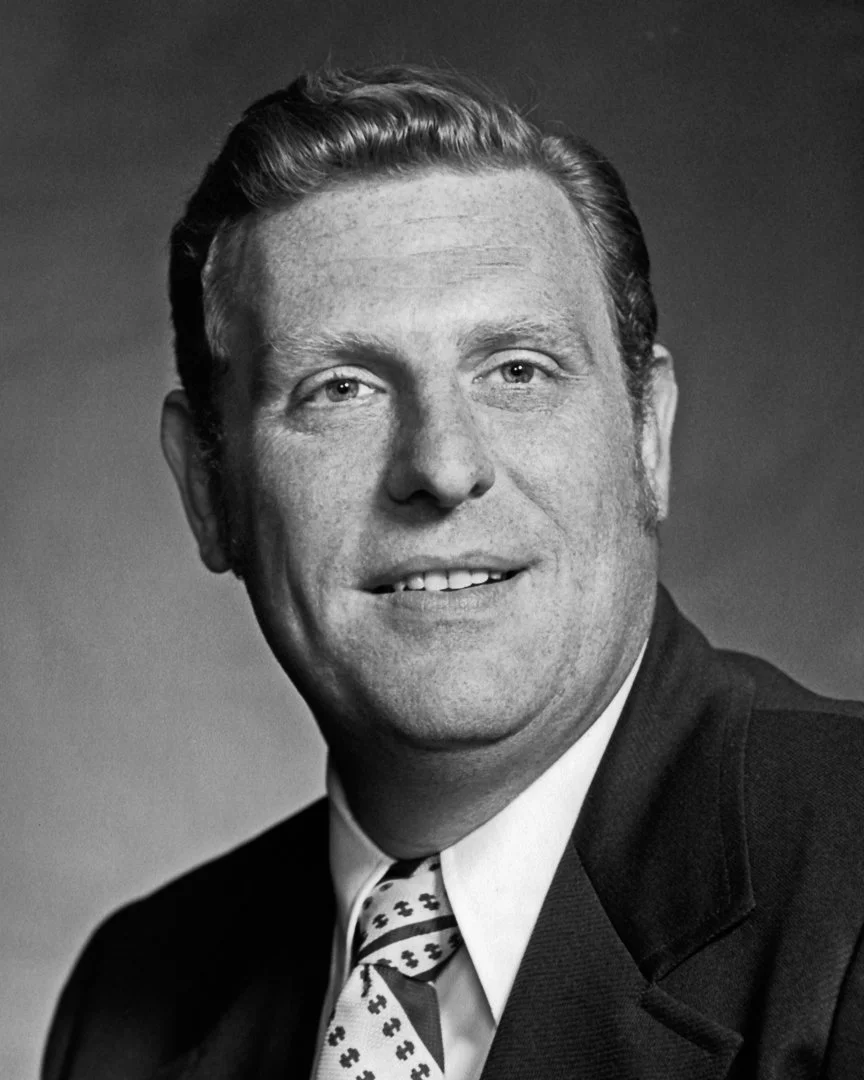
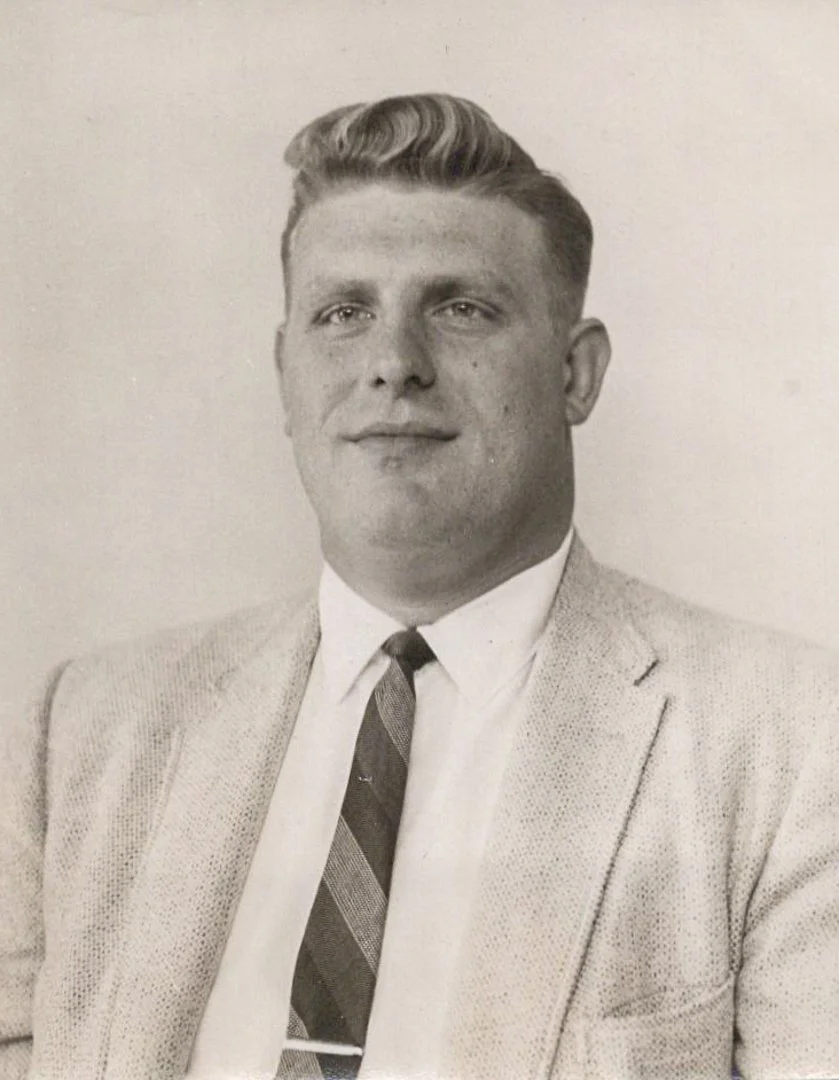
Richard P. Klug
By Jeffrey R. Klug
Richard Paul Klug was born on September 13, 1934, and passed away on November 20, 1993, after a hard fight with pancreatic cancer. He lived just 59 years, but they were full years—years spent working, building, and most of all, helping others. If there was a single belief that guided him, it was simple: you show up for people. He carried that belief from his days as a Boy Scout through the very end of his life.
My earliest memory of Menomonee Falls is tied to him. I was four or five, standing with my family at the Pilgrim Shopping Center on a cold start to winter, waiting for Santa Claus. My father was helping organize the Christmas parade. Santa didn’t arrive the usual way that year—he came down from the sky, parachuting into a nearby field. Something went wrong. Santa broke his leg on landing, though most of us kids never quite understood what had happened. What I did understand was the excitement, the sense that something big was happening, and that my father was right in the middle of it. That was how I first saw the Falls—and, in a way, how I first saw him.
He had grown up there, a 1952 graduate of Menomonee Falls High School. He played football, basketball, and baseball on championship teams, and somehow still found time to play trombone in the band. He used to tell stories about halftime—how he’d run off the field, grab his instrument, play with the band, and then rush back to finish the game. That was him in a nutshell: always moving, always giving everything he had.
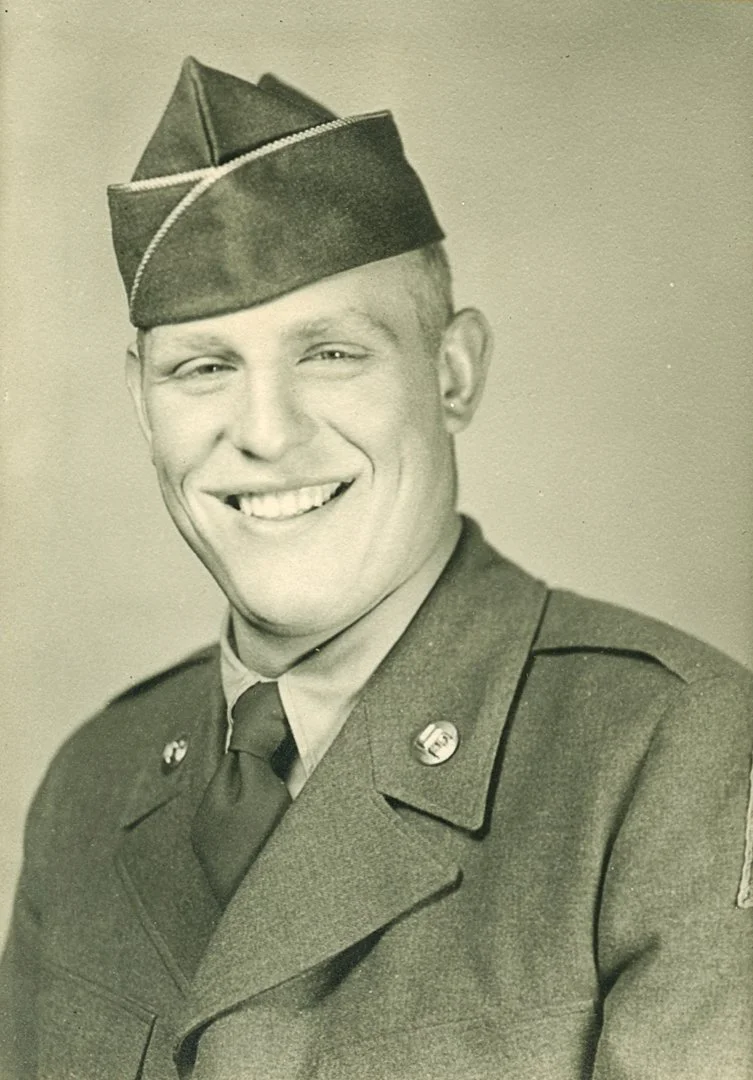
After high school, he enlisted in the U.S. Army in 1954 and served in Korea as a military policeman. When he came home, he tried a different path—attending Elmhurst College to become a minister—but life had other plans. He worked where he could: selling used cars, repossessing them, even running the switchboard at the downtown YMCA. That’s where he met my mother, Arleen. They married in 1958, and together began building a life rooted in hard work and steady purpose.
In 1960, he took a job at Farmers and Merchants Bank as an assistant cashier—back when that meant carrying the books out for someone else. He worked his way up, step by step, until he became Chairman and CEO. I saw him at work often. In those days, a loan could still begin with a handshake. He believed in people—really believed in them. If someone had character and a plan, he would give them a chance. Most of the time, they proved him right.
But the bank was only one part of his life. Once rooted in Menomonee Falls, he became part of nearly everything that made the town run. The Chamber of Commerce, the Kiwanis Club, Rotary—he gave his time freely. In 1962, he became president of the Chamber, and in 1971 he received its Industrial Appreciation Award. Recognition never seemed to matter much to him, though. The work itself did.
The YMCA held a special place in his life. He helped raise funds for the building that still stands today, working alongside his mother, Theodora. Before that, the Y operated out of a cluster of modest buildings, but even then it was a place of energy and community. My father coached youth sports there, and both my sister and I were on his teams. Winning was never the point. Effort was. If we lost, he would say, “There’s always next week.” And we believed him.
Through the Y, I found my own path into volunteering. I joined the Junior Leaders, helping coach and referee younger kids. It was my first lesson in giving back—one that stayed with me, just as it had stayed with him.
In 1964, he was appointed to the Police and Fire Commission, a role he cherished. I remember going with him to watch testing sessions for new officers—physical drills, written exams, all of it. The department was small back then, just a handful of squads, but the pride was there. Those experiences left a mark on me. Even today, when I photograph retirements for the Menomonee Falls Police Department, I carry that early sense of respect with me.
He had a way of pulling me into his world. When the fire department burned old buildings for training, he would take me along. That’s where I began to see things through a camera. The firefighters came to know me, and later, when I chased fires to photograph them, they trusted me enough to get close. I gave them copies of the images. It was an exchange built on respect—something I had learned from him.
In 1967, he took on one of his largest undertakings: organizing the Menomonee Falls Diamond Jubilee. I was nine. What I remember most are the parades, the costumes, and the sense that the whole town was alive with purpose. We rode in a Mustang convertible, traveling from town to town to promote the celebration. It seemed like he worked day and night that year. Looking back, I think that experience helped shape the leader he would later become at the bank.
His involvement didn’t slow with time—it expanded. He worked on the Vince Lombardi Memorial Golf Classic, chaired the United Cerebral Palsy Telethon, and served countless organizations: United Way, the Menomonee Falls Youth Center, the Boy Scouts, the United Performing Arts Foundation, Lakeland College, and Waukesha County Mental Health, among others. In 1992, he received the Jack Birchhill Award, though awards never defined him. Service did.
One of his final and most meaningful efforts was leading the campaign to raise $2.5 million for the Cancer Care Center at Community Memorial Hospital. The center opened in 1993. He was among its first patients. He died later that year, in November, in the very place he had worked so hard to create.
There’s something steadying about that. Something right.
I’ve walked into that center myself, years later, as a cancer survivor. My mother did too before she passed in 2016. Every time I step through those doors, I think of him—not as he was at the end, but as he always was: moving, building, helping.
Even in his final months, he didn’t slow down. He kept volunteering. He kept saying yes. He balanced it all—family, his orchard, church, the Masons, the Shriners—never making it seem like a burden.
And even now, years later, I still meet people who tell me how he helped them. Sometimes it’s a story I’ve never heard before. That’s how you know the measure of a life—not in titles, but in the quiet ways it touches others.
He taught me to work hard, to show up, and to give back when I can. I’ve tried to follow that path in my own way. I’ve taught photography, served my community, and done what I could. I don’t know that anyone could match what he gave.
But I understand what he was trying to do.
And that matters.